



Trump: US Has to “Make It So That China Doesn’t Get the Hold” of Crypto
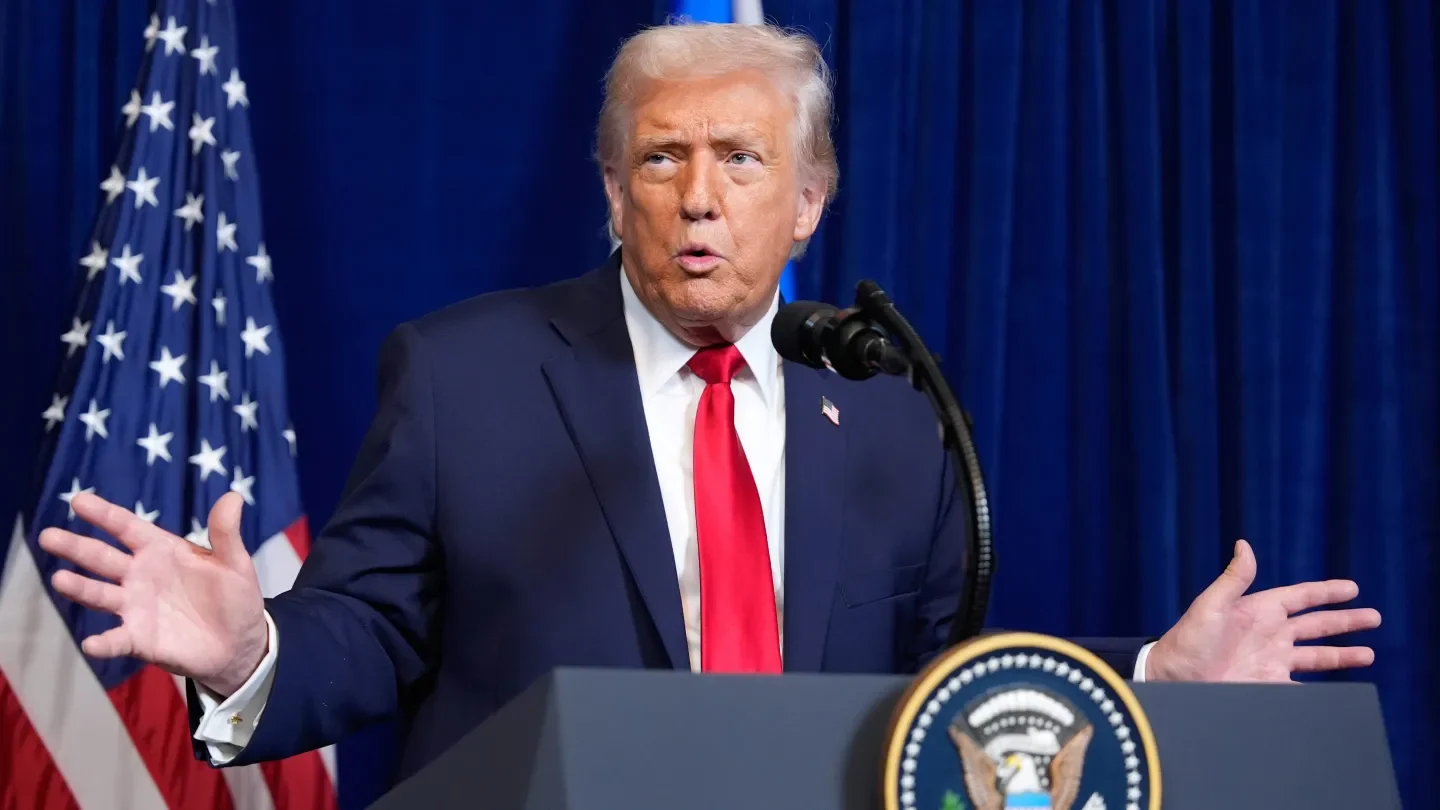
In a high-profile Davos speech at the World Economic Forum, US President Donald Trump placed cryptocurrency and blockchain technology at the center of an escalating economic and strategic rivalry between the United States and China. Speaking before global political and business leaders, Trump warned that the US must act decisively to ensure China does not gain long-term control over the crypto ecosystem, calling digital assets a critical front in the future battle for financial power.
The remarks signal a significant shift in how crypto is being discussed at the highest levels of Washington. No longer framed purely as a speculative asset class or niche technology, crypto is now being treated as strategic infrastructure tied to national security, monetary dominance, and global influence. For the White House, the question is no longer whether crypto matters, but who will shape its rules and reap its geopolitical advantages.
Trump frames crypto as a geopolitical race
During his Davos speech, Trump made it clear that his renewed push for pro-crypto legislation is driven less by market enthusiasm and more by competition with Beijing. Referring to China’s growing ambitions in digital finance, Trump said the US must “make it so that China doesn’t get the hold” of crypto, warning that once that dominance is established, it may be impossible to reverse.
Trump explicitly linked this strategy to the GENIUS Act, a payments-focused stablecoin bill signed in July 2025. While acknowledging that crypto is “politically good” and popular with voters, he emphasized that the deeper motivation is strategic. According to Trump, China has long viewed digital money as a tool to expand its global economic reach, and the US cannot afford to fall behind.
This framing reflects a broader shift in US crypto policy, where blockchain infrastructure is increasingly viewed as essential to maintaining the dollar’s role in global finance.
Why China’s digital yuan alarms Washington
At the heart of these concerns is China’s central bank digital currency (CBDC), commonly known as the digital yuan. The system has been live for several years and continues to expand in scope and functionality. Beginning in January 2026, the People’s Bank of China will allow commercial banks to pay interest on digital yuan deposits, a move that dramatically enhances its appeal.
This policy enables China to:
- Offer yield on digital money directly through its banking system
- Encourage adoption through cross-border trade partnerships
- Reduce dependence on US dollar-based settlement rails
For policymakers in Washington, this development raises serious red flags. A widely adopted interest-bearing digital yuan could weaken the dominance of the dollar in global trade, especially in emerging markets where access to US financial infrastructure is limited.
The White House now faces mounting pressure to respond with a competitive alternative rooted in private-sector innovation rather than state-controlled digital currency.
Stablecoins and the future of the dollar
Rather than launching a US CBDC, American policymakers have leaned toward supporting privately issued, dollar-pegged stablecoins such as USDC and USDT. These assets allow users worldwide to hold and transfer digital dollars instantly, making them powerful tools for extending dollar influence onchain.
However, internal disagreements over US crypto policy threaten this strategy. Banking groups in Washington are pushing provisions in the proposed CLARITY Act that would restrict or ban yield on dollar-backed stablecoins. Their argument is that offering 5% or higher yields could pull deposits away from traditional banks, destabilizing the financial system.
Trump’s comments at Davos suggest he sees this caution as a strategic mistake. Limiting stablecoin competitiveness, he implied, could leave US digital dollars at a disadvantage compared to China’s interest-bearing digital yuan.
Stablecoin yield as a strategic weapon
Yield has emerged as a key battleground in the global competition over digital money. Crypto users already understand that interest-bearing stablecoins:
- Offer 5–8% returns on dollar assets, often available 24/7
- Attract large inflows from both retail and institutional investors
- Compete directly with savings accounts and money market funds
From a geopolitical perspective, yield isn’t just a financial incentive — it’s a mechanism for adoption. Experts warn that restricting stablecoin rewards could push users, businesses, and even governments toward alternative digital currencies, including China’s CBDC.
Trump’s framing positions yield not as a regulatory loophole, but as a strategic lever in the global contest over monetary influence.
CLARITY Act delays deepen uncertainty
Trump’s Davos speech also came amid renewed uncertainty surrounding the CLARITY Act, the major crypto market structure bill currently stalled in the US Senate. The legislation was delayed after Coinbase CEO Brian Armstrong criticized the draft, citing concerns over restrictions on DeFi, tokenized equities, and caps on stablecoin yields.
The Senate Banking Committee has postponed its markup, leaving the future of comprehensive US crypto policy unclear. For many industry participants, this delay represents a dangerous pause at a critical moment.
Without clear rules, the US risks:
- Losing crypto startups to faster-moving jurisdictions such as the EU or Singapore
- Allowing China to shape global standards for digital money
- Undermining confidence in dollar-pegged stablecoins as global settlement tools
From the perspective of Washington, regulatory indecision may prove more damaging than regulatory risk.
What Trump’s message means for markets and builders
For investors and builders, Trump’s remarks mark an important signal. Crypto policy is no longer being shaped solely by regulators and lobbyists — it is now a geopolitical priority tied directly to the White House agenda.
Market participants are watching closely for:
- Changes in stablecoin yield regulation
- Institutional flows into US dollar-backed digital assets
- Growth in blockchain networks that support stablecoin settlement
Layer-1 and Layer-2 blockchains that facilitate fast, low-cost dollar transactions could see increased adoption if the US commits to strengthening onchain dollar infrastructure.
The bigger picture: crypto as national infrastructure
Trump’s earlier promise was to make the US the world capital of artificial intelligence and crypto. His latest message is sharper and more urgent: crypto dominance is no longer optional, it is a national imperative.
From the White House to Washington’s regulatory agencies, crypto is increasingly viewed as infrastructure on par with payment systems, capital markets, and telecommunications. Decisions made in 2026 could determine whether the dollar remains the dominant global currency in a blockchain-driven financial system.
If 2024 and 2025 were defined by Bitcoin ETFs and institutional adoption, 2026 is shaping up to be the year of national crypto strategies. Trump’s warning about China “getting the hold” of crypto underscores a broader reality: blockchain technology is now a frontline issue in the global struggle for financial supremacy.