



The Securities and Exchange Commission publishes crypto custody guide for retail investors
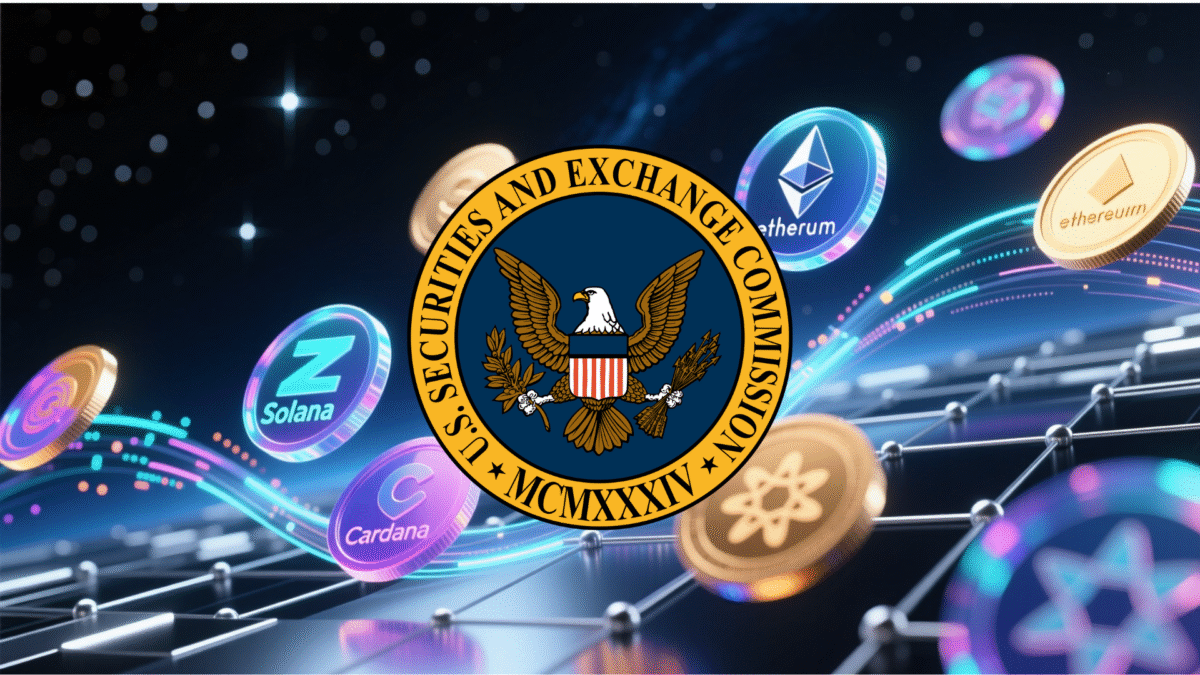
The United States Securities and Exchange Commission has released a new investor bulletin on crypto wallet and custody basics, a move that is already making waves across crypto news and among the crypto pur community. The guide aims to explain how different custody methods work, what risks they carry, and how retail investors can think more carefully about where and how they store digital assets in the broader blockchain technology ecosystem.
What’s in the SEC’s new crypto custody guide?
The SEC’s bulletin breaks down the core options for holding crypto: self‑custody versus using a third‑party custodian. It stresses that anyone choosing a custodian should understand key policies, such as whether the provider lends out (rehypothecates) customer assets or pools them together in omnibus accounts instead of holding them in segregated wallets. These practices can materially affect what happens if the provider faces insolvency, legal issues, or security breaches.
The guide also explains the main crypto wallet categories, distinguishing between hot wallets (connected to the internet) and cold wallets (kept offline). Hot wallets are framed as convenient for frequent transactions but are more exposed to hacking and cyberattacks. Cold storage, by contrast, reduces online attack surface but introduces its own risks: devices can fail, be lost or stolen, and private keys can be misplaced permanently, resulting in irreversible loss of funds.
From hostility to education: a shift in SEC stance
For many in the crypto pur and broader blockchain community, the most striking aspect of this bulletin is what it symbolizes. Under former leadership, the SEC was widely perceived as adversarial toward digital assets, often emphasizing enforcement and litigation over engagement and education. The publication of a practical custody guide marks a notable shift toward acknowledging that retail investors are using crypto and deserve straightforward, safety‑focused information.
Commentators have described it as a transformational moment: the same regulator that previously sought to rein in large parts of the industry is now offering granular guidance on how to use crypto more safely. Industry voices have praised the bulletin as “huge value” for less experienced users, particularly those who may not fully understand the tradeoffs between leaving coins on exchanges, using custodial solutions, or taking full self‑custody with hardware devices or other offline tools.
SEC connects education with onchain market structure
The timing of the custody bulletin is also telling. It came just one day after SEC Chair Paul Atkins indicated that the legacy financial system is steadily moving onchain, signaling that tokenization and blockchain-based infrastructure are no longer fringe concepts. In parallel, the SEC approved the Depository Trust and Clearing Corporation (DTCC) to begin offering tokenization services for traditional instruments, including equities, ETFs, and government debt.
These developments suggest a coordinated effort: if more traditional assets and settlement processes are going to live on blockchain rails, regulators need both robust oversight frameworks and an educated public. Teaching investors about crypto custody, how to secure keys, what to ask custodians, and how to recognize structural risks fits neatly into that broader modernization agenda.
Why this matters for crypto news, blockchain technology, and crypto pur
For everyday users, the SEC’s custody guide reinforces several key lessons:
- Control over private keys is both power and responsibility; losing them usually means losing funds.
- Not all third‑party custodians operate the same way, and terms like “segregated accounts” versus “commingled pools” have real consequences in stress events.
- Choosing between hot and cold storage is not about “right or wrong” but about matching your risk tolerance, technical comfort, and time horizon.
For the crypto pur movement, the bulletin is further evidence that blockchain technology is no longer operating entirely outside the regulatory perimeter. Instead, crypto is being integrated into mainstream financial education and infrastructure. While some will remain wary of any regulator involvement, others see this as a necessary step toward safer adoption at scale.
As tokenization grows and more assets move onchain, understanding custody won’t be optional; it will be a core skill. In that sense, the SEC’s investor bulletin may mark the start of a new phase where regulators, institutions, and the crypto community share a common interest: ensuring that people can participate in digital asset markets without losing their savings to avoidable custody mistakes.