



Russia Targets Unregistered Crypto Miners With New Criminal Penalties
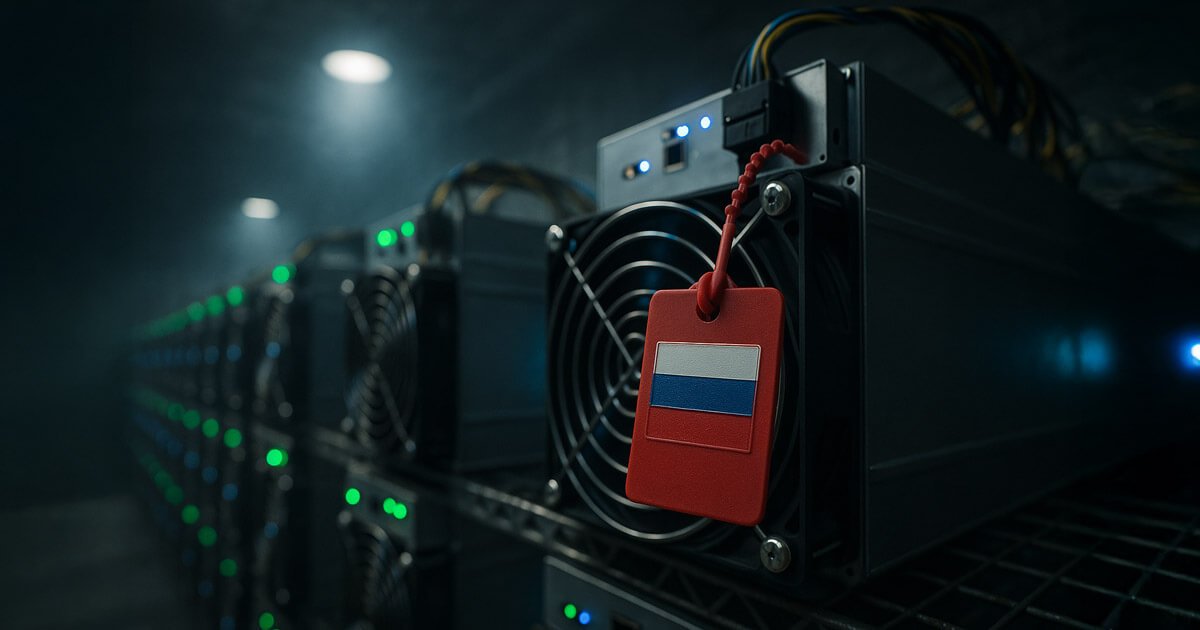
In major crypto news this week, Russia’s Ministry of Justice has unveiled a draft bill proposing harsh criminal penalties for unregistered crypto miners, as officials intensify their crackdown on illegal mining operations. The move underscores the government’s push to formalize the country’s fast-growing digital asset industry and enforce taxation on blockchain-based activities.
According to the new amendments to Russia’s Criminal Code, published on Monday, individuals caught engaging in unregistered or illegal cryptocurrency mining could face significant fines and forced labor. The proposed penalties include fines of up to 1.5 million rubles (around $19,000) and two years of forced labor for standard offenses.
However, miners operating in organized groups or earning exceptionally large profits may face up to five years in prison, 480 hours of forced labor, and fines reaching 2.5 million rubles. The proposal marks one of the toughest anti-mining measures yet from the Russian government a country that remains one of the world’s largest contributors to the Bitcoin network’s hashrate.
Moscow’s Ongoing Push to Regulate Crypto Mining
The draft proposal is part of a broader effort by Russian authorities to bring the digital asset economy out of the shadows and into the country’s formal tax system. In recent statements, Deputy Minister of Finance Ivan Chebeskov said that compliance among miners remains worryingly low.
“Our general approach when we introduced mining regulation into this industry was to bring it out of the shadows as much as possible. We have not yet completed this process,” Chebeskov told state-run news outlet Tass.
As of mid-2025, only about 30% of Russia’s crypto miners had officially registered their operations with the Federal Tax Service. Those who fail to do so now risk criminal prosecution under the proposed legislation.
Tax Reporting and Electricity Thresholds
Under the country’s current mining framework, miners are required to file a monthly tax declaration detailing the amount of digital currency produced. Smaller operators consuming less than 6,000 kWh per month are treated as individual miners and are not required to register, though they must still pay personal income tax on their mined assets.
This structure was first defined under a decree signed in November 2024, following President Vladimir Putin’s approval of new laws that legalized cryptocurrency mining while setting clear restrictions.
A Growing but Fragmented Mining Industry
Despite tighter regulations, Russia remains one of the largest blockchain technology hubs for crypto mining globally, largely due to its accessible energy resources. However, officials argue that decentralization without oversight has created loopholes including unregistered foreign entities and tax evasion.
Minister of Finance Anton Siluanov revealed that as of October 2025, just 1,364 miners were officially registered in Russia’s tax database. This is a small fraction of the total number of operators believed to be running mining farms across major energy-producing regions like Irkutsk and Krasnoyarsk.
Siluanov also highlighted the government’s plan to tighten regional oversight, stating that local authorities will have the power to restrict or ban mining in zones experiencing energy supply stress.
Legalization Without Full Freedom
While crypto mining became partially legalized under Putin’s 2024 decree, foreign entities are prohibited from participating in Russia’s mining industry. This restriction has drawn criticism from local crypto pur advocates, who argue that the legal framework remains half-measured and limits innovation.
The Ministry of Finance maintains that the law’s intent is not to stifle blockchain development but to ensure financial accountability. “If miners want to operate legitimately, they must register, pay taxes, and follow operational security standards,” Chebeskov said.
Still, some analysts warn that the new criminal penalties could push smaller miners further underground. Many individuals in rural regions mine crypto for supplemental income and may struggle to meet registration or tax filing costs.
The Path Ahead
As 2026 begins, the new proposal highlights Russia’s attempt to balance its ambition of becoming a crypto and blockchain hub with its tradition of centralized regulation. The Ministry of Justice’s aggressive stance may help formalize the sector, but also risks stifling grassroots innovation within the crypto pur community.
For now, Russian officials appear determined to curb illegal mining not by banning blockchain technology, but by enclosing it within the country’s strict regulatory perimeter. Whether that will strengthen transparency or lead to a digital gray market remains to be seen.