



Satoshi Nakamoto statue arrives at NYSE, marking a new era for Bitcoin and Wall Street
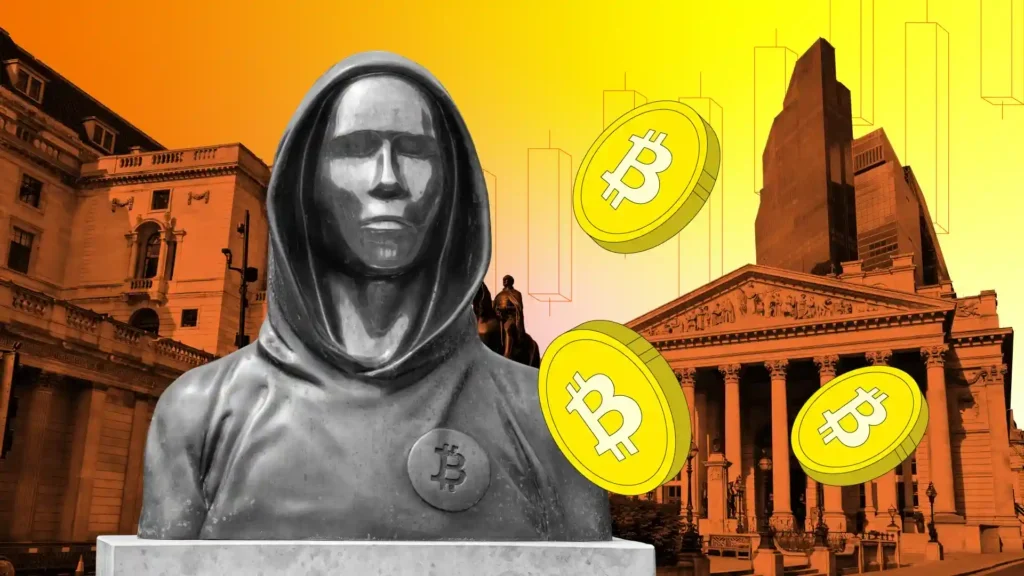
A bronze statue honoring pseudonymous Bitcoin creator Satoshi Nakamoto has been installed at the New York Stock Exchange (NYSE), a powerful symbol of how far crypto has come from its early outsider days to the heart of traditional finance. The move has quickly become a focal point in crypto news, resonating with the global crypto pur community and highlighting how deeply blockchain technology is now embedded in mainstream markets.
Satoshi statue finds a home on Wall Street
The NYSE is now the sixth location to host Italian artist Valentina Picozzi’s “disappearing” Satoshi Nakamoto statue, joining existing installations in Switzerland, El Salvador, Japan, Vietnam, and Miami in the US. The exchange described the work as “shared ground between emerging systems and established institutions,” underlining how Bitcoin and legacy finance are increasingly intersecting.
The installation was sponsored by Bitcoin-focused firm Twenty One Capital, which began trading on the NYSE this week, adding a further layer of symbolism as a BTC-native company debuts on the world’s most iconic stock exchange. For Picozzi, who posts under the Satoshigallery moniker, seeing her sixth Satoshi piece in such a high‑profile venue is “mind‑blowing” and represents a milestone she described as beyond her “wildest dreams.”
The timing is also poignant: the statue’s arrival closely coincides with the anniversary of the original Bitcoin mailing list, launched by Satoshi Nakamoto on Dec. 10, 2008, only weeks before the genesis block was mined.
From cypherpunk experiment to institutional asset
Satoshi Nakamoto mined Bitcoin’s genesis block on Jan. 3, 2009, minting the first 50 BTC and effectively launching the modern crypto ecosystem. Just over a year later, in May 2010, Laszlo Hanyecz made history with the first documented purchase using BTC 10,000 coins for two pizzas, an event now celebrated every year as Bitcoin Pizza Day.
In the years that followed, Bitcoin and other cryptocurrencies faced deep skepticism. Banks and large institutions kept their distance, while regulators in several jurisdictions pursued aggressive enforcement and indirect pressure campaigns, often described by critics as attempts to suppress or marginalize the industry. Yet despite those headwinds, Bitcoin adoption continued to grow, carried by developers, miners, early investors and the broader blockchain technology community.
The tide turned as major financial players began to openly embrace Bitcoin and tokenization. High‑profile skeptics, including BlackRock CEO Larry Fink, reversed their positions and started championing digital assets and onchain finance. Wall Street giants rushed to offer exposure through spot and futures exchange-traded funds and, in some cases, by holding Bitcoin directly on their balance sheets.
Today, public companies, private firms, sovereign entities and ETFs collectively hold more than 3.7 million BTC in various treasury and investment vehicles, a stash valued in the hundreds of billions of dollars. For many in the crypto pur community, the NYSE statue is a visual shorthand for this journey: from fringe cypherpunk idea to globally recognized store of value and settlement asset.
The 21‑statue vision and Satoshi’s “disappearing” legacy
Picozzi’s NYSE statue is part of a broader project to place 21 Satoshi monuments around the world, a number that echoes Bitcoin’s fixed maximum supply of 21 million coins. Five are already standing in Switzerland, El Salvador, Japan, Vietnam, and Miami, with the NYSE becoming number six. Each piece is designed with a “disappearing” aesthetic, meant to evoke Satoshi’s anonymity and gradual withdrawal from public view.
The sculpture depicts a hooded “hacker” figure seated with a laptop, deliberately stylized to honor the developers and programmers who have built and maintained the Bitcoin ecosystem over the years. According to Picozzi, the partially abstract form conveys the idea that Satoshi now exists primarily “between the lines” of the Bitcoin code present in the protocol and its impact rather than as a known individual.
For blockchain technology advocates, the expanding Satoshi statue series serves as both an artistic tribute and an educational tool, prompting passersby to ask who Satoshi was, why Bitcoin matters, and what decentralization and financial freedom mean in a digitized economy. For traders and institutions on Wall Street, the NYSE installation is a daily reminder that crypto is no longer a niche experiment it is a permanent feature of the modern financial landscape.
Why this matters for crypto news and crypto pur followers
The Satoshi statue at the NYSE is more than a photo opportunity; it captures the shifting relationship between traditional markets and the digital asset world:
- It signals that Bitcoin has earned a place in the same physical and symbolic space as blue‑chip equities and global indices.
- It recognizes the contribution of anonymous and open-source builders whose work underpins much of today’s blockchain infrastructure.
- It reinforces the idea that crypto pur ideals decentralization, transparency, and permissionless access are increasingly influencing mainstream financial discourse.
As more Satoshi statues appear worldwide and institutional adoption deepens, the line between “old finance” and “new finance” continues to blur. For the crypto community, the NYSE installation marks a powerful moment: Satoshi Nakamoto, an anonymous coder who disappeared more than a decade ago, now stands literally and figuratively at the front door of Wall Street.