


Flexionics Partners With India Blockchain Tour to Bring the Future of AI Compute and Energy Infrastructure to Metamorphosis
Swiss energy technology company Flexionics joins India Blockchain Tour and Metamorphosis, showcasing how flexible compute infrastructure can help stabilize power grids and accelerate the integration of renewable energy
India, September 2026: The world’s artificial intelligence boom is creating a problem that has received considerably less attention than the race for GPUs: electricity.
AI data centres require enormous amounts of power, and as AI workloads scale, electricity demand is becoming one of the critical infrastructure constraints for the next generation of computing.
Swiss energy technology company Flexionics Energy AG is working at the intersection of these two worlds—compute and energy—with a different proposition: instead of treating large compute facilities purely as electricity consumers, they can also become flexible assets that actively support the power grid.
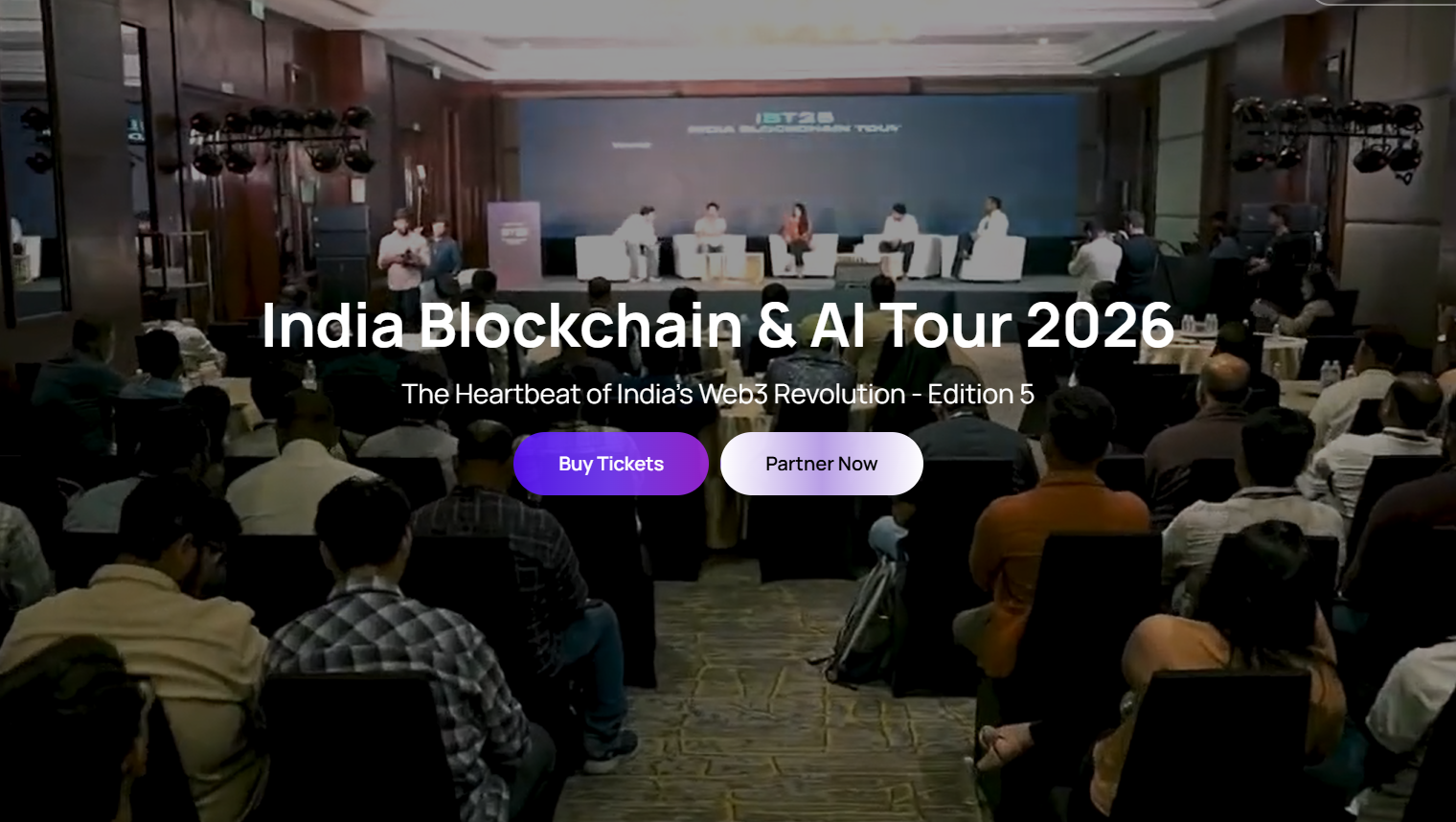
Flexionics has partnered with India Blockchain Tour (IBT) 2026 and its flagship event Metamorphosis in Hyderabad, bringing its work in grid flexibility, energy markets and compute infrastructure to India’s growing AI and Web3 ecosystem.
When compute becomes part of the grid
Traditional data centres are designed around a simple model: the grid supplies electricity, and the data centre consumes it.
Flexionics is challenging that model.
Its technology allows selected compute infrastructure to dynamically adjust electricity consumption in response to real-time grid requirements. By controlling compute loads within milliseconds, these facilities can participate in electricity reserve markets and provide flexibility to transmission system operators.
The company’s platform combines containerised ASIC compute, on-site power controllers, industrial-grade smart meters and cloud-based fleet management, allowing compute infrastructure to respond to grid signals while continuing to generate computational revenue.
The result is a new category of infrastructure in which a compute facility can generate revenue from two sources simultaneously:
Computational revenue + Grid flexibility revenue
That is particularly relevant as Europe and other markets attempt to integrate increasing amounts of intermittent renewable energy into existing electricity networks.
From Bitcoin mining to AI infrastructure
Flexionics’ journey into grid flexibility began with Bitcoin mining.
Bitcoin mining hardware provided an unusual characteristic for an energy-intensive computing load: unlike many industrial processes, mining workloads can be rapidly increased or reduced in response to external signals.
Flexionics used that characteristic to develop and demonstrate grid flexibility capabilities, including participation in Sweden’s balancing markets operated by Svenska kraftnät.
The company says its live operations have delivered more than 200 GWh of flexibility capacity since 2023, with a 70% mFRR activation rate during the May–August 2026 operating season. It is technically capable of participating across five Nordic reserve markets.
But Bitcoin mining is no longer the destination.
It was the proving ground.
Flexionics is now applying the same underlying principle to AI and high-performance computing.
The company argues that the rapid growth of AI compute creates an opportunity to rethink how data centres interact with the grid. Large AI clusters can create significant changes in power demand as workloads start, stop and scale, creating challenges for grid operators. Flexionics’ approach is to make that computational load more responsive and controllable.
AI’s next infrastructure challenge isn’t just GPUs
The global AI race has largely been framed around chips, models and data.
Increasingly, however, another question is becoming unavoidable:
Where will all the electricity come from?
AI data centres can require substantial and highly concentrated power capacity. At the same time, renewable generation is inherently variable, creating periods where electricity is abundant and periods where grids need additional balancing capacity.
Flexionics’ model attempts to connect those two problems.
Its infrastructure can be deployed alongside renewable generation, including solar and wind farms, to absorb excess electricity during periods of curtailment or low prices. The company says its systems can then reduce consumption rapidly when grid conditions require it.
For renewable energy operators, this creates another potential source of value: excess generation that might otherwise be curtailed can instead be consumed by flexible compute infrastructure.
For the grid, flexible demand can provide a resource that responds at the speed required by modern electricity markets.
And for compute operators, the same infrastructure can continue generating revenue through computational workloads.
A different way to think about energy-intensive computing
Battery storage has become one of the dominant answers to the flexibility challenge.
Flexionics believes compute can play a complementary role.
Unlike batteries, compute infrastructure does not degrade through repeated charge and discharge cycles. Servers can be dispatched repeatedly without the capacity degradation associated with electrochemical storage, while the computational workload itself can generate revenue.
The company therefore positions compute flexibility not as a replacement for batteries, but as another tool for building a more flexible electricity system.
This becomes particularly interesting as AI pushes more computing capacity into regions where electricity infrastructure is already constrained.
Instead of asking only:
“How much power does this data centre need?”
Flexionics is asking:
“How can this data centre also help the grid?”
Why this matters to India’s AI ecosystem
According to India’s Ministry of Electronics and Information Technology, the country’s installed data-centre capacity increased from 375 MW in 2020 to approximately 1,575 MW by August 2026, with the growth of AI and high-performance computing driving demand for further expansion.
As hyperscalers, enterprises and startups invest in increasingly sophisticated AI workloads, the country’s future AI competitiveness will depend on more than access to models and chips. It will also depend on the availability, reliability and economics of the energy infrastructure supporting those systems.
That creates an emerging intersection between AI infrastructure, energy markets and grid flexibility.
For India’s technology ecosystem, the implications extend beyond data centres.
The same conversation touches renewable-energy integration, industrial loads, energy trading, data-centre economics and the infrastructure required to support increasingly energy-intensive computing.
It is precisely the type of cross-industry conversation that Metamorphosis is designed to bring together.
Taking the conversation beyond technology
Flexionics’ partnership with India Blockchain Tour reflects the increasingly interconnected nature of the technologies represented at IBT and Metamorphosis.
India Blockchain Tour began with a mission to educate people about blockchain and Web3 and to bring emerging-technology conversations to communities across the country.
As the ecosystem has evolved, so has the conversation.
Blockchain infrastructure led to questions around compute. Digital assets created new discussions around energy markets. And the rapid emergence of AI is now bringing compute, electricity and infrastructure into the same conversation.
“The most interesting developments in emerging technology increasingly happen at the intersections between industries. Energy and compute are a perfect example of that. AI is going to require enormous amounts of infrastructure, and we need to think about how that infrastructure interacts with the systems around it,” said Anupam Varshney, Founder of Octaloop and India Blockchain Tour.
Bipin Patel, CEO of Flexionics Energy AG, sees this convergence of energy and compute as an opportunity to rethink the role of data centres in the electricity system. He said: “As the world moves closer and closer towards eventually being fully powered by renewable energy sources, we need to find the best ways to support emerging power-hungry technologies such as AI without derailing the energy transition. Flexionics sits at the intersection of these transformational technological shifts by enabling AI Data centres to become tools to stabilise electricity networks rather than stressing them further.”
From digital infrastructure to energy infrastructure
Flexionics’ partnership with IBT extends to Metamorphosis in Hyderabad, where the company will engage with founders, developers, investors, technology companies and the broader AI and Web3 ecosystem.
For Flexionics, the partnership provides an opportunity to introduce the technology community to an emerging category of infrastructure where AI, high-performance computing, renewable energy and electricity markets converge.
For IBT, it represents a continuation of its broader mission to take emerging-technology education beyond individual technologies and explore the infrastructure that will determine how those technologies scale.
The AI revolution will require more than better models.
It will require chips, data centres, networks—and enormous amounts of electricity.
The question increasingly isn’t simply how much energy AI will consume.
It is whether AI compute itself can become part of the infrastructure that helps make the energy transition possible.
Flexionics has demonstrated the flexible-compute model in live Nordic operations and is now working to scale that model into AI and HPC.
About Flexionics Energy AG
Flexionics Energy AG is a Swiss energy technology company working at the intersection of compute infrastructure and electricity grids. The company converts flexible compute assets into grid-stabilising, revenue-generating resources, enabling them to participate in Nordic reserve markets while simultaneously generating computational revenue.
Flexionics provides flexibility-business-service, partnerships with renewable energy operators and AI-powered energy-market automation. Its technology stack includes containerised compute infrastructure, on-site power controls, smart metering and automated market participation. The company has delivered more than 200 GWh of flexibility capacity since 2023 and is expanding its technology from Bitcoin-mining-derived flexibility into AI and HPC workloads.
About India Blockchain Tour
India Blockchain Tour (IBT) is a nationwide blockchain and Web3 ecosystem initiative by Octaloop. Founded around the mission of blockchain education and community building, IBT brings blockchain and Web3 conversations directly to communities across India, connecting founders, developers, investors, enterprises and users.
About Metamorphosis
Metamorphosis is Octaloop’s flagship AI and Web3 summit taking place in Hyderabad, bringing together the builders, founders, investors, technology companies and ecosystem leaders shaping the future of emerging technology.